
Why Canvas Quality Matters in Paint by Number (and What I Learned Testing It)
When people talk about paint-by-number kits, the focus is almost always on the paint. And while paint quality is critical, my research quickly revealed something just as important—if not more so: the canvas.
Before starting Mitten Masterpiece, I approached this as a customer first endeavor. I ordered paint-by-number kits from nearly every major national retailer I could find. I also went a step further and purchased custom-printed canvases from large overseas manufacturers, including several well-known suppliers on Alibaba. I wanted to understand the full spectrum of what was available, how it felt to paint on, and why experiences varied so widely from kit to kit.
What I discovered was simple but eye-opening: canvas quality varies dramatically, and it has a direct impact on how enjoyable—or frustrating—the painting process becomes.
What I Noticed Right Away
Some canvases felt thin and papery. Others were stiff, rough, or inconsistently textured. A few looked fine at first but revealed problems once paint was applied—jagged weave patterns, uneven absorption, or brush drag that made smooth strokes difficult.
In some cases, the brush would catch on the canvas texture, breaking the rhythm of painting and making detailed areas harder to control. In others, paint would soak in unevenly, dulling color and requiring additional layers just to achieve decent coverage.
As a painter, these issues pull you out of the experience. Instead of relaxing into the process, you start compensating—adjusting pressure, reloading the brush constantly, or going back over areas that should have been effortless.
Comparing National Retail Kits and Overseas Prints
Ordering kits from national retailers showed me just how inconsistent canvas sourcing can be. Some kits used passable materials, while others felt more like disposable craft surfaces. Rarely did the canvas feel intentionally chosen to support a high-quality finished piece.
The overseas custom-printed canvases were equally variable. Some were overly coarse, others under-primed, and many lacked consistency from one batch to the next. While these options can work well for high-volume production, they often prioritize cost and speed over the painting experience itself.
None of this was surprising—but experiencing it firsthand made one thing clear: canvas choice isn’t a background decision. It’s foundational.
Why Texture and Priming Matter So Much
The biggest difference between an average canvas and a great one comes down to two factors: texture and priming.
A rough or jagged canvas surface creates friction. The brush catches, lines feel less controlled, and small numbered areas become more difficult to paint cleanly. For paint-by-number artists—especially those painting for relaxation—this friction disrupts flow.
Under-primed canvases introduce a different problem. Paint absorbs too quickly, colors appear dull, and coverage suffers. Instead of paint sitting smoothly on the surface, it sinks unevenly into the fibers.
Both issues make painting harder than it needs to be.
Discovering Triple-Primed Cotton Canvas
After months of testing, I landed on triple-primed cotton canvas—and the difference was immediate.
Painting on this surface feels smooth, almost like painting on glass. The brush glides effortlessly without catching on the weave. Paint sits beautifully on the surface, allowing for even coverage and clean edges without excessive layering.
The triple priming creates a consistent barrier that supports color vibrancy while still allowing the paint to bond properly. Colors remain rich once dry, and fine details stay crisp. For paint by number, where control and clarity matter, this balance is essential.
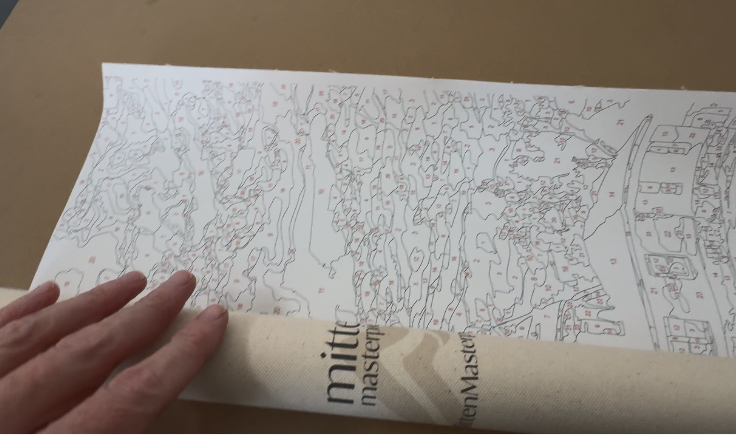
Our Preferred Canvas
Triple Primed Rolled Cotton Canvas
How It Changes the Painting Experience
The right canvas doesn’t just improve the finished artwork—it changes how painting feels from the very first brushstroke.
On a well-primed cotton canvas:
The brush moves smoothly and predictably
Paint flows into small areas without resistance
Coverage is even and satisfying
Painting feels calm, not corrective
This matters because paint by number is as much about the process as the result. When materials work with you instead of against you, the experience becomes immersive and rewarding rather than frustrating.
Why We Chose This Canvas for Mitten Masterpiece
Choosing a triple-primed cotton canvas wasn’t about finding the most economical option. It was about finding the surface that consistently delivered the best painting experience and the most display-worthy finished piece.
Every Mitten Masterpiece kit is designed with the end result in mind: artwork you’re proud to frame and hang. The canvas plays a major role in that outcome—not just visually, but emotionally. When painting feels smooth and intuitive, confidence builds. When confidence builds, the finished artwork reflects it.
What Canvas Quality Ultimately Says About a Kit
Canvas quality is one of those details customers may not notice immediately—but they feel it. It shows up in how relaxed they feel while painting, how vibrant the colors appear, and how polished the finished piece looks on the wall.
Testing kits from national retailers and overseas manufacturers taught me that canvas is often treated as an afterthought. For us, it became a priority. Because when you’re investing hours into a painting, the surface beneath your brush should support the experience—not distract from it.
At Mitten Masterpiece, the canvas isn’t just something paint goes on. It’s part of the craft.
❤️ With Love from Michigan,
Bobbie