
Testing Acrylic Paints for Paint by Number: A Year-Long Journey to Get It Right
When we first began developing paint-by-number kits, I assumed choosing paint would be one of the simpler decisions. After all, acrylic paint is widely available, comes in countless colors, and is marketed for everything from casual crafting to fine art. But it didn’t take long to realize that paint quality isn’t a small detail—it’s the foundation of the entire painting experience.
Over the course of a year, I tested a wide range of acrylic paints purchased directly from craft stores, experimenting with how they behaved on canvas, how they covered printed numbers, and how they felt during long painting sessions. What began as curiosity quickly turned into a deep, methodical process—one that ultimately shaped every Mitten Masterpiece kit.
Chalky and Matte Craft Paints
The first paints I tested were inexpensive craft paints with a chalky or ultra-matte finish. On the surface, these paints seemed appealing: they dried quickly, came in a wide range of colors, and were easy to find. But once on canvas, their limitations became clear.
Coverage was inconsistent, especially over printed line work. Colors often appeared flat or dull once dry, and layering required multiple coats. For paint-by-number artists—especially beginners—this meant extra work and less predictable results. The painting process felt more like problem-solving than relaxation.
Satin-Finish Craft Paints
Next came satin-finish craft paints, which promised smoother application and richer color. While these paints performed better than chalky formulas, they still fell short of what I was looking for. Some colors covered well while others remained streaky, and consistency varied noticeably between batches.
For a paint-by-number kit, that kind of unpredictability matters. Painters should be able to trust that each color will behave the same way from start to finish, without needing advanced technique to compensate.
Student-Grade Acrylic Paints
Student-grade acrylics marked a clear step up. Pigment quality improved, coverage was more reliable, and the overall painting experience felt closer to traditional fine art. However, many student paints were thicker than ideal for paint-by-number use, requiring frequent thinning.
While experienced painters might enjoy adjusting paint consistency, most paint-by-number customers expect paints to be ready to use straight from the pot. Thickness added friction to the process, pulling attention away from the enjoyment of painting itself.
Paints That Were Simply Too Thick
Some paints—regardless of grade—were simply too heavy-bodied for paint by number. Thick acrylics tended to obscure detail, leave texture where it wasn’t wanted, and make small numbered areas more difficult to control. Even when thinned, the results weren’t always consistent.
This reinforced an important lesson: paint-by-number kits need paint designed for control, flow, and coverage—not just pigment strength.
Discovering Artist-Grade Acrylics
Eventually, I turned to well-known artist-grade acrylic paints. The difference was immediate. Pigment density was higher, colors were truer, and coverage improved dramatically. But not all artist paints were ideal for paint by number. Some were still too thick, while others required significant modification to work smoothly in small, detailed areas.
That’s when I discovered Golden Fluid Acrylics.
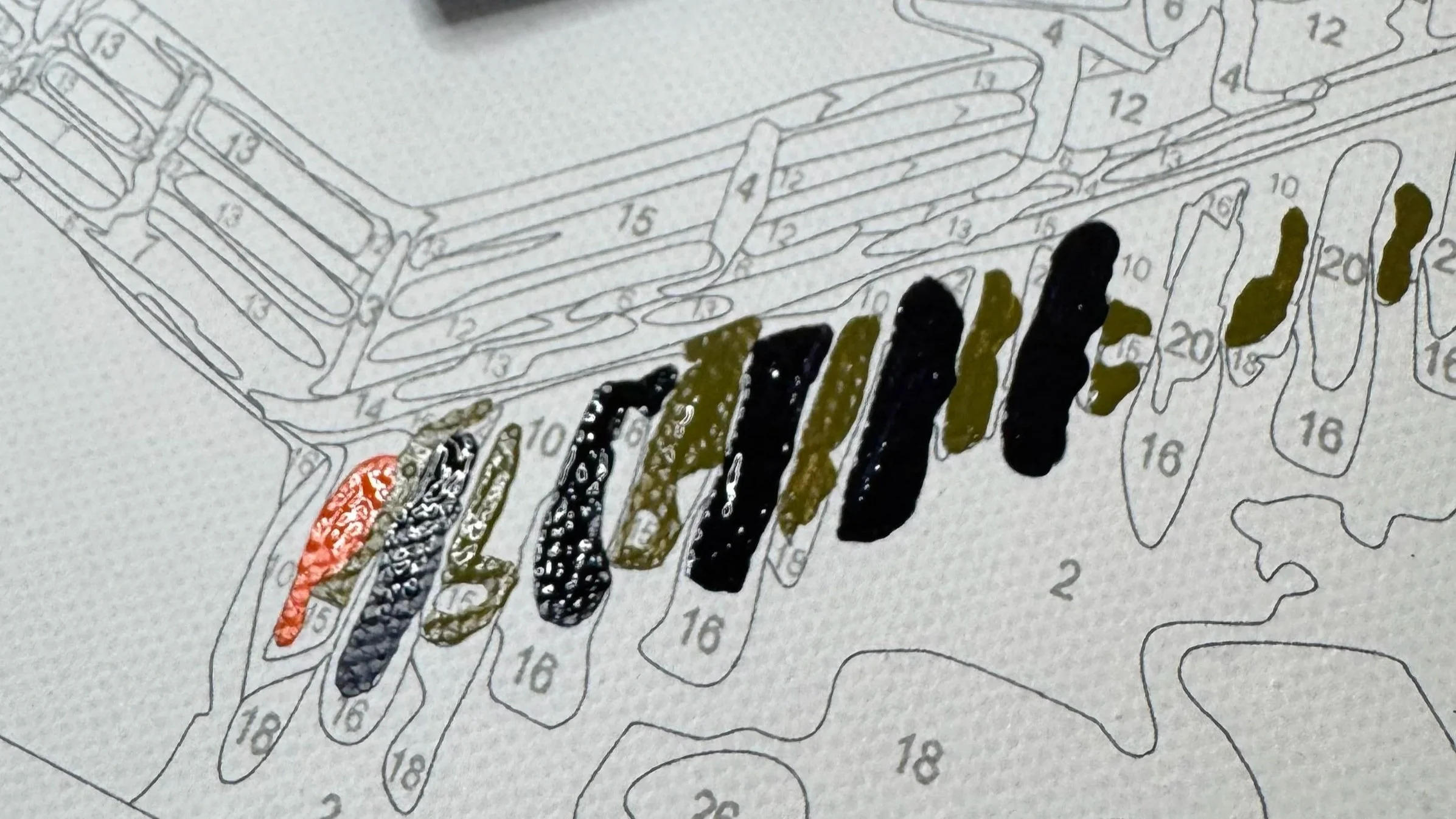
Golden Fluid Acrylic Paints on a Canvas
Why We Chose Golden Fluid Acrylics
Golden Fluid Acrylics offered the balance I had been searching for. Their naturally fluid consistency allows paint to flow easily into detailed areas without flooding lines or obscuring design. Coverage is strong and even, often in a single coat, and colors remain vibrant once dry.
Just as importantly, they feel good to paint with. The brush glides smoothly, edges stay clean, and the painting experience feels calm and controlled—exactly what paint-by-number should be.
Hand-Mixed, In-House, and Custom to Each Design
Choosing the paint was only part of the equation. Every Mitten Masterpiece kit uses paints that are hand-mixed in-house, custom-matched to the colors generated by our computer-based design system. Rather than relying on generic, pre-filled colors, we mix each shade intentionally to reflect the final artwork as accurately as possible.
This process allows us to maintain consistency across kits while ensuring each color works harmoniously with the others. It also gives us the flexibility to refine palettes as designs evolve—something that simply isn’t possible with mass-produced paint sets.
Why This Process Matters
Testing acrylic paints over an entire year taught me that paint quality directly shapes how a paint-by-number kit feels. When paint behaves well, the process becomes immersive instead of frustrating. When colors cover cleanly and flow smoothly, painters can focus on the joy of creating rather than correcting.
At Mitten Masterpiece, we believe the finished artwork should reflect not only the design itself, but the care that went into every decision behind it. Choosing Golden Fluid Acrylics—and mixing them by hand for each kit—wasn’t about choosing the most recognizable name. It was about choosing the paint that best supports a beautiful, rewarding painting experience from start to finish.
❤️ With Love from Michigan,
Bobbie